OUTWITTING THE DRAGON LONGZE (STORY BY BOST, 2026- PART 2)
That afternoon John set to the task of repairing Dragon Longze, he first rummaged among the heap of old iron and found there some heavy chains and a great collar that had been made in the days when men sang over their work and put their hearts into it, so that the things they made were strong enough to bear the weight of a thousand years, let alone a dragon.
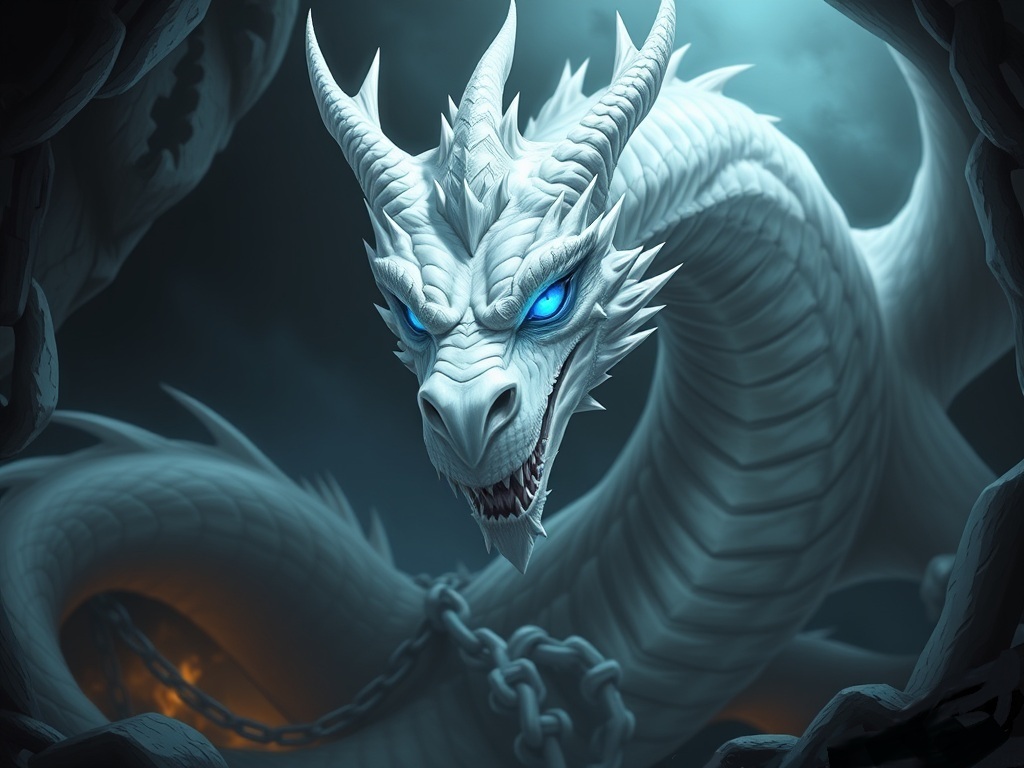
John fastened dragon Longze up with the chains, and when he had padlocked them all on safely, he set to work to find out how many rivets would be needed.
“Six, eight, ten—twenty, forty,” said he. “I haven’t half enough rivets in the shop. If you’ll excuse me, sir, I’ll step around to another forge and get a few dozen more. I won’t be a minute.”
And off he went, leaving the baby in front of the dragon’s forepaws, laughing and crowing with pleasure at the very large purr of it.
John ran as hard as he could into the town and found the mayor and corporation.
“There’s a dragon in my dungeon,” he said; “I’ve chained him up. Now come and help to get my baby away.”
And he told them all about it.
But they all happened to have engagements for that evening; so, they praised John’s cleverness, and said they were quite content to leave the matter in his hands. In truth, they did not believe him, suspecting him of spreading a yarn (or a fib) for whatever reason. Dragons had been extinct for a millennium now; moreover, the townsfolk were a selfish lot, some were cruel narcissist, but the majority were all greedy, conniving (devious), wary lot (doubtful), and even cowardly.
“But what about my baby?” said John.
“Oh, well,” said the mayor, placing a conciliating (placating) hand over John’s shoulder, “if anything should happen, you will always be able to remember that your baby perished in a good cause.”
So, John went home again and told his wife some of what had happened.
“You’ve given the baby to the dragon!” she screamed (shrieked) at him. “Oh, you unnatural parent!”
“Hush,” said John, and he told her some more. “Now,” he said, “I’m going down. After I’ve been down you can go, and if you keep your head the boy will be all right.”
So down went the blacksmith, and there was the dragon still purring away to keep the baby quiet. The dragon Longze had been quite amused at first by this strange soft bundle of pliant (supple) flesh swaddled in soft cloth, that reacted favorably to his purring. The baby incessantly cooed and gurgled, drooling, making odd sounds; furthermore, the baby was clearly unafraid, even smiling at him, a strange but lovable creature that it was. But eventually, dragon Longze’s interest began to fade (ebb) and his patience started to wear rather thin.
“Hurry up, can’t you?” the dragon said. “I can’t keep up this noise all night.”
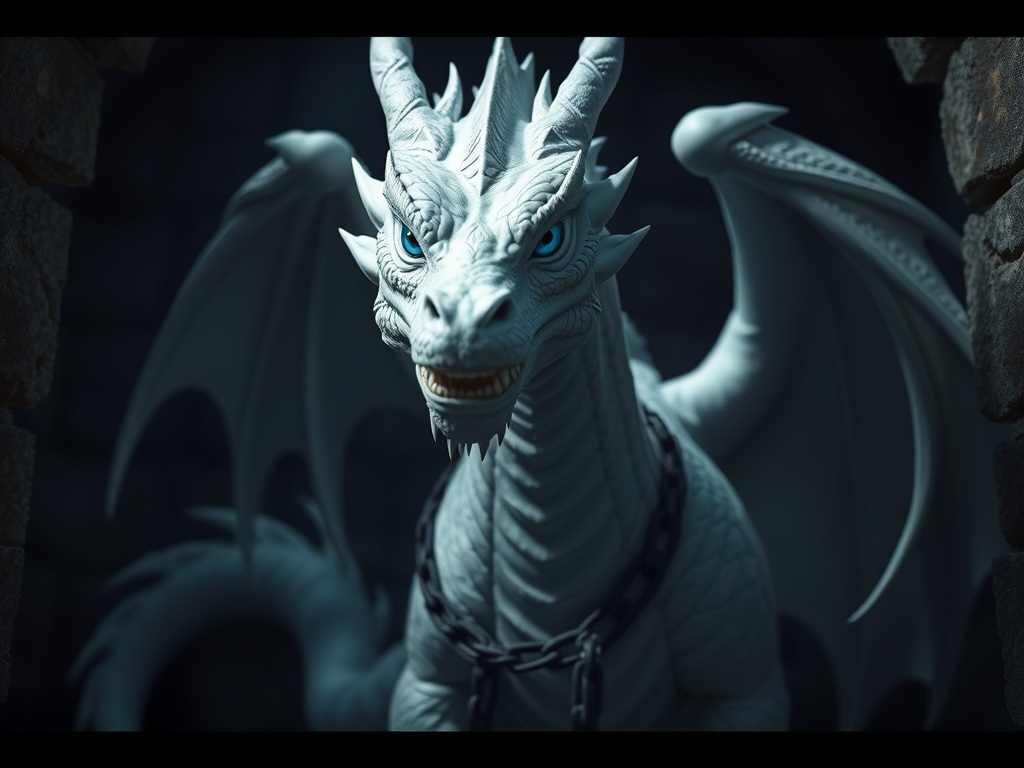
“I’m very sorry, sir,” said the blacksmith, “but all the shops are shut. The job must wait till the morning. And don’t forget you’ve promised to take care of that baby. You’ll find it a little tiresome, I’m afraid. Good night, sir.” John quickly climbed the stairs, not giving the dragon any chance to respond.
John did not go far however, once at the outside of the left ajar dungeon door, unseen, he quietly sat on his rump (rear end) and leaned his back to the wall. Though he would never admit it, his shoulders slumped wearily (despairingly) betraying the placid (tranquil) mask he wore on his face. He half-lowered his eyelids, pinning his gaze on the ground and quietly waited; he was prepared to keeping vigil, if necessary, all night long. In truth, his innate instincts had absolute faith in this noble dragon; but his parental obligation had constrained him nevertheless to stay close, per chance the dragon suddenly succumbed to anger or became erratic, and therefore, endangered his precious bundle.
The dragon Longze had purred till small hours, but then he got tired of it; moreover, he was annoyed, understanding the trick John had played on him. So now he stopped, and as soon as everything was quiet, the baby thought everyone must have settled for the night, and that it was time to begin to scream. So, it began.
“Oh, dear,” said the dragon, “this is dreadful (awful) noise. Now, there, there…” He gently patted the baby with his claw, but it screamed more than ever.
” Humans are so guileful (sly, cunning) and even the best of them is detestable.” Jaded dragon Longze now grumbled.
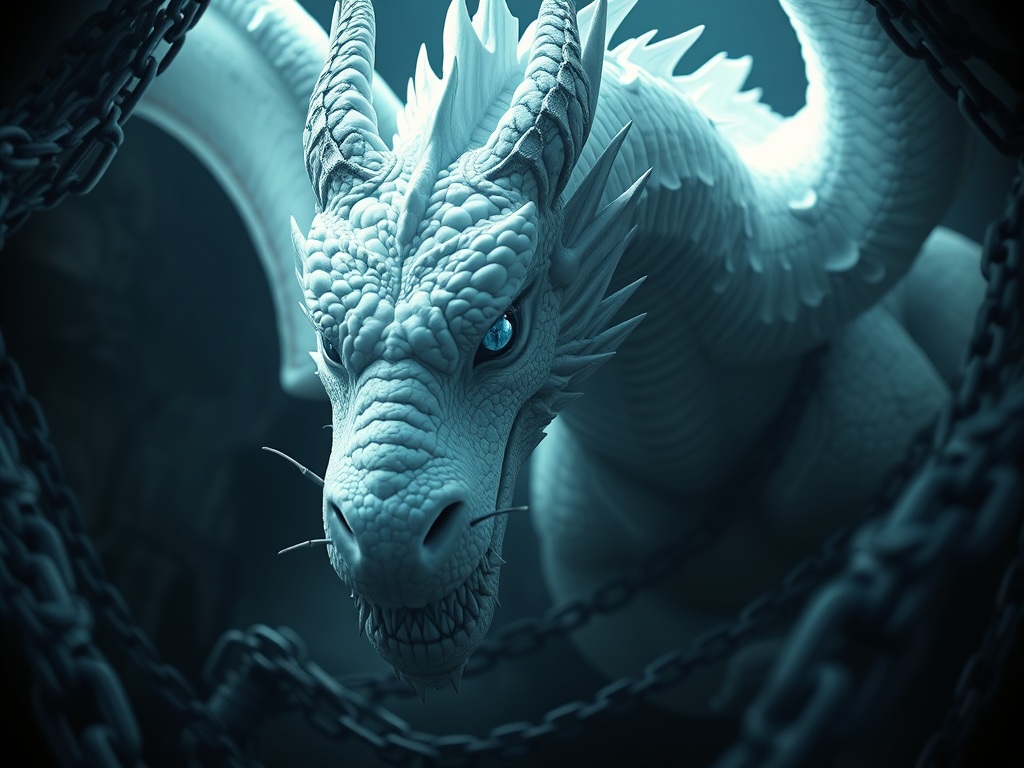
From the start, Longze had seen something in John that set him apart from the typical humans; though, his unique compassion and generosity of heart had made him vulnerable despite his robust physique and intrepid fortitude (grit, stamina. But now Longze was second guessing his original feel. Besides which, he felt increasingly more annoyed by all the deceit and the disrespect shown to him. Feeling suddenly tired, Longze yearned for a good night’s slumber (repose, sleep) to rest his weary bones.”
The baby, meanwhile, went on screaming.
The dragon Longze could have squashed it and instantaneously, permanently put a stop to all that jarring noise; meanwhile, he could not help but wonder why John had left his clearly precious son in obviously precarious (vulnerable) position. Was John, adapting such a drastic measure (and by taking a sure gamble), wished to convey (express) his full confidence in his (Longze’s )benevolence, while establishing an innate bond, a bridge, between their species (genus)? Clearly, he was no ordinary mortal.
Age old beliefs now in doubt, “Things will never be the same for me after this,” mused Longze. “Nevertheless, I must put a stop to this incessant noise before it seriously tests my patience. Hush, then—did ‘ums, then.” And so, the Dragon Longze tried to placate the baby as if it had been a young dragon. But when he began to sing “Hush-a-by, Dragon,” the baby, not mollified, he screamed increasingly more.
“I can’t subdue this incessant, raucous neonate (newborn); can’t keep it quiet,” huffed the exasperated Longze; and then suddenly he saw a woman sitting on the steps. “Here, I say,” said he, “do you know anything about babies?”
“I do, a little,” eyeing the dragon suspiciously and not wishing to divulge more, said the mother. Betty had fought her husband on this, and defiantly entered the dungeon, and set on the steps at the very top, at first seething in rage, then observing the dragon’s tolerance and so, by degrees calming, she’d kept a sullen (fretting, morose), vigilant eye on the unfolding scene.

“Then I wish you’d take him away, and let me get some respite,” said the dragon Longze, yawning. “You can bring it back in the morning before the blacksmith comes.”
She didn’t need to be asked twice; at once descending the steps, mother’s protective instinct emboldening her, she fearlessly drew near (quite close) to the dragon and picked up her son.
The baby cradled in his mother’s bosom, inhaling her familiar scent, abruptly then stopped all his ruckus (brawl, rumpus); thus, she quickly mounted the steps, and exited the dungeon. A frown (a scowl) registered on her lips, the moment her seething, rebuking gaze turned on her husband, who nevertheless dismissed it, and knowingly smiled. She could not maintain her ire for too long, and so, after exasperatedly exhaling the breath of relief, she nodded, and he happily follow her (in tow) to their bedroom.
At daybreak the subsequent day, John went down and boldly, unapologetically, explained to the dragon Longze exactly how matters stood. He’d kept his word meanwhile, and first and foremost, diligently and competently repaired the Dragon’s injury. Then, however, electing to keep the locks and chains where they stood, furthermore, retrieving the iron gate with a grating to it, he set it up at the foot of the steps, therefore imprisoning the Dragon.
The dragon Longze was both irate (furious) and same time impressed with John’s deception and courageous acumen, understanding why he’d done as he did. He was after all protecting (upholding, preserving) the safety and welfare of his family, as well, the townsfolks; though being so discerning, Longze doubted townspeople would see it that way, nor will they ever truly appreciate John’s efforts that afforded them salvation and the purported (supposed) lasting security.
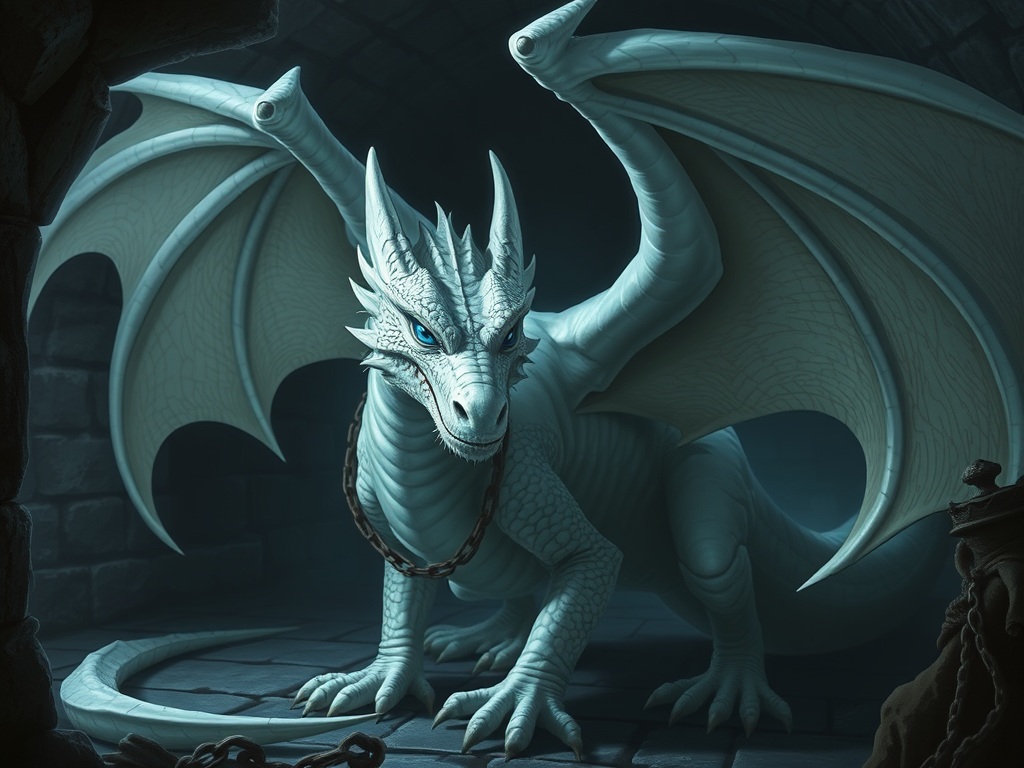
The dragon Longze , meanwhile, had not been as helpless as he seemed; he had in fact considered breaking his bonds and leaving this contemptable town the moment John had left his side. Longze however had had a soft spot for this young hero, so he remained as he were, supposedly restrained and imprisoned; as his curious nature propelled (drove) Longze to wait and see how things would unfold later on that day, anticipating correctly, that the mayor and the towns elite would seek to confirm proof of John’s claim.
Sure enough, afterwards John had gone straight to the mayor and said: “I’ve got the dragon suitably incarcerated (confined, secured) in the dungeon; rest assured, he will pose no further danger to anyone in town.” But of course, they needed proof, so they followed him back to the castle, and went straight down to the dungeon.
“Noble preserver,” elatedly cried the mayor seeing with his own eyes the absolute proof of John’s claims. “You’ve truly gone and done it! We will, hence, get up a subscription for you, and crown you in public with a laurel wreath.”
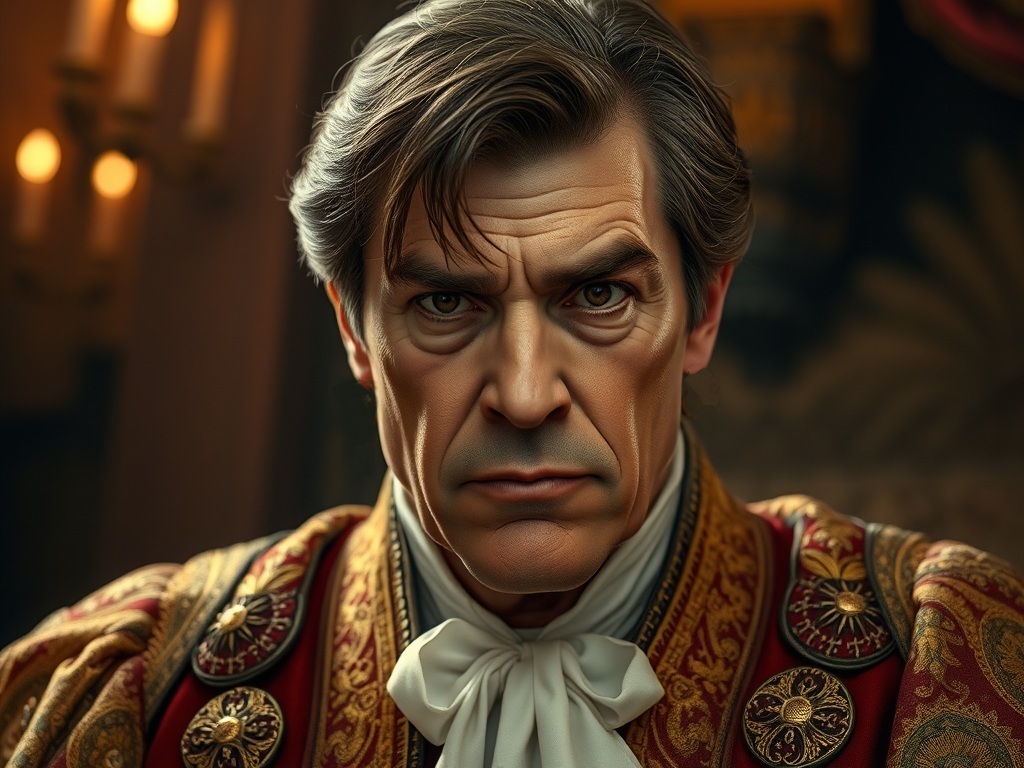
So, the mayor put his name down for six pounds, and the corporation each gave four, and other people gave their guineas and half guineas and crowns or two crowns, and while the subscription was being made the mayor ordered two poems at his own expense from the town poet to celebrate the occasion. These poems were very much more admired, especially by the mayor and corporation.
The first poem dealt with the noble conduct of the mayor in arranging to have the menacing dragon tied up. It also described the splendid assistance rendered by the corporation. And the second expressed the pride and joy of the poet in being permitted to sing such deeds.
When the subscription was finished there was more than five hundred pounds accumulated, a considerable sum, in the coffers, and a committee was formed to settle what should be done with it. Part of it went to pay for the elaborate banquet in honor of the mayor and the corporation; another bit was spent in buying commemorative, gold medals with impaled dragons on them, to pin on the corporate members’ chests; and the reminder that was left, was allocated to other committee expenses.
So, there was nothing left for the blacksmith John except the laurel wreath and the knowledge that it really was he who had saved the town. Nevertheless, after these frivolous expenditures, from thereon things had gone a little better for the blacksmith’s family. To begin with, the baby did not cry so much as it had before. Then the rich lady who owned the goat was so touched by John’s noble action that she ordered a complete set of shoes at 3 shillings, 5 pence, and even made it up to 4 shillings, 7 pence, in grateful recognition of his public-spirited conduct.
Subsequently, endless hoards of tourists flocked to the region (town) from quite a long ways off, and they paid three and a half pence each to go down the steps and peep through the iron grating at the white dragon in the dungeon—and it was four pence extra for each party if the posted armed guard (assigned by the mayor) let off colored fire to see it by, which, as the fire was extremely short, was three pence-halfpenny clear profit every time. Meanwhile the blacksmith John’s wife used to provide teas at tenpence a head, and altogether things grew brighter week by week.
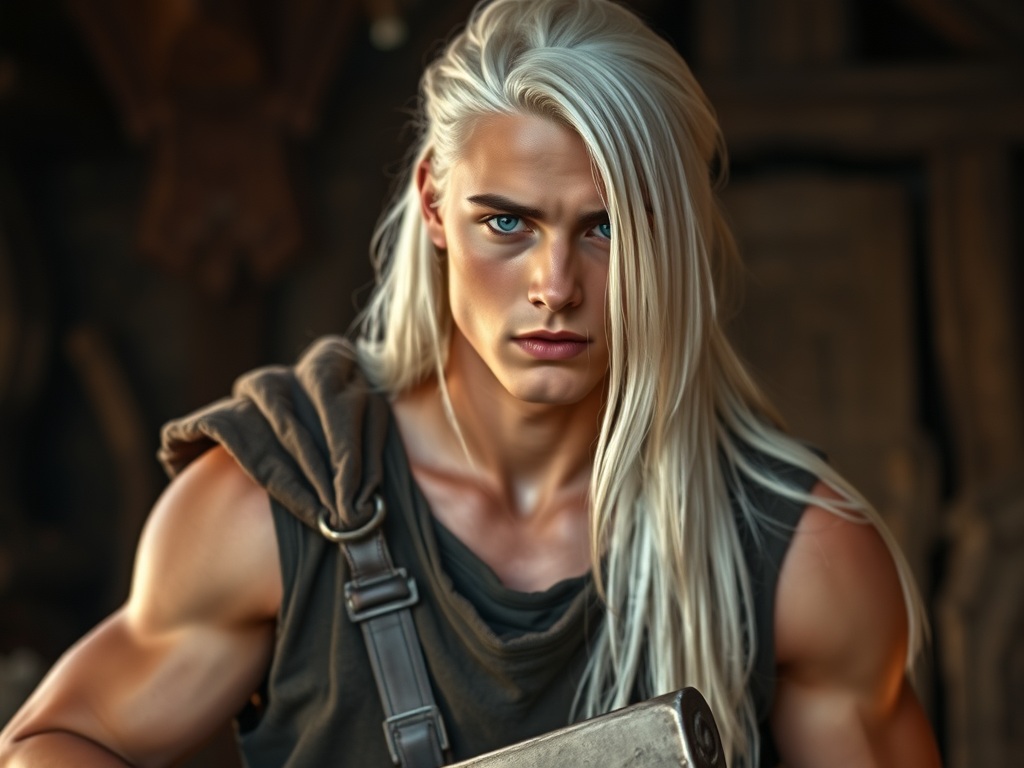
John from the first, had refused to take any part in all of this despicable and farcical entertainment (amusement); he would not benefit from funds derived from the humiliating carnival like atmosphere, that put the noble dragon on daily display. He felt deeply shamed and grieved most sincerely, for his earlier unwitting part in all of this duplicitous debauchery, and in due course, perpetuating this most demeaning, injurious depravity (corruption, degeneracy) of the noble dragon.
The dragon Longze, despite his boundless generosity of the heart, had eventually grown weary of this worst aspect of humanity, the rampant corruption, his unwitting exploitation and all the immoral display. And so, late one night, when John had pensively gone down to check on the captive dragon Longze, to visit with the poor creature and again, ask for his forgiveness: the dragon pre-emptively instead, had told him, a time had come for him now to abscond. He then with dignified air, though tentatively (hesitantly), asked John next, to release him from his bonds. What John did not know however, was this too was a test, and he had not disappointed Longze’s faith in him.
Even though John knew this would land him in serious trouble, the blacksmith had been so beset with remorse that he without single moment’s hesitation, had immediately done as the dragon Longze had asked of him.
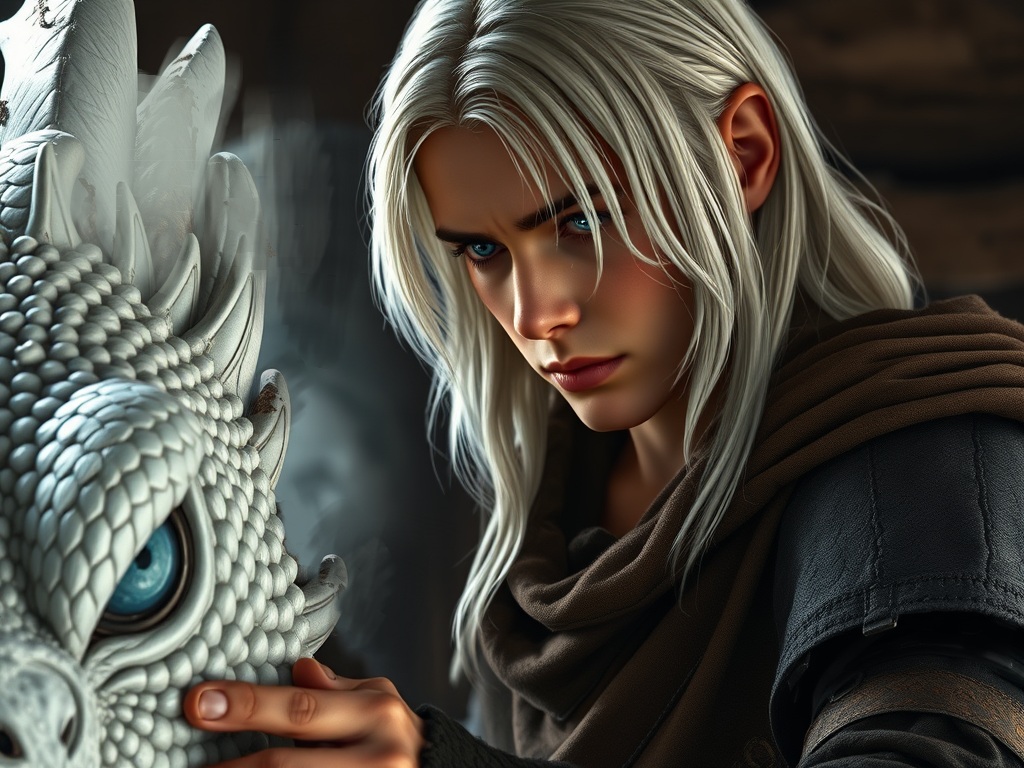
“We shall not see each other for a long while; however, by your actions you have earned my lasting esteem. If you are ever in need, I shall return, to set things right by you. Farewell for now, my dear friend. “Dragon Longze then had reverently bowed his head to John and then suddenly poof, disappeared in thin air.
John had fully grasped it then, that he’d never really been in charge (command); and that he was the one who had been outwitted (outfoxed) instead, by the gentle natured celestial dragon who, with infinite patience, had sought all along to attain, a genuine spark of true benevolence from a single mortal being .
FIN


Leave a comment